Six practice areas. They overlap in practice, and plenty of work starts as one and turns into another. Open whichever sits closest to your situation.
Go-to-market strategy
Positioning, segmentation and the route to the customer.
The mechanics travel. A financial advisor platform, a payroll product and a consumer subscription share one problem: a motion that looks sound on paper and numbers that say otherwise. You get a written diagnosis of where it leaks, a plan in priority order, and a testing framework your team keeps running without me.
Lifecycle marketing
Onboarding, retention and expansion, plus the sending infrastructure underneath.
Most programs are built once and then inherited by people who did not build them, which is how a team ends up with forty active sends and no map. Segmentation, triggers, sequence design, and deliverability, because a program nobody receives is not a program. At Intuit I moved TurboTax inbox placement from roughly 75 percent to above 98.
Conversion rate optimization
Where the funnel actually loses people, and the testing discipline to fix it.
Teams testing button colours usually have a funnel losing people three steps earlier for reasons nobody has looked at. Start where the drop actually is, then build a roadmap with enough structure that results are readable: one change at a time, a stated hypothesis, and a decision rule agreed before the test runs.
Lead generation
Sources, offer, list quality and the compliance posture around all of it.
Volume is the easy part and it is rarely the problem. What matters is where leads genuinely come from, what each source is worth by the end of the funnel, and whether the capture experience and the data practice behind it hold up. You get a remediation list your own team can mostly run.
Performance marketing
Google and Meta. Oversight above the channel, not account management.
I do not want your ad account login. I want to ask what the people inside it are too close to ask: whether the channel mix still matches where customers come from, whether the CAC number measures what everyone assumes, and where the funnel loses people after the click. Traffic arbitrage models included.
Product marketing
Positioning, messaging, launch and the handoff into sales and lifecycle.
Most positioning problems arrive disguised as messaging problems. The work covers who the product is genuinely for, what it is compared against in the buyer’s head rather than in the competitive grid, pricing and packaging, and the enablement that stops a launch ending at the announcement. If sales describes the product differently from your website, start there.
Fixed scope · Fixed fee · A date on the calendar
Workshops and team training
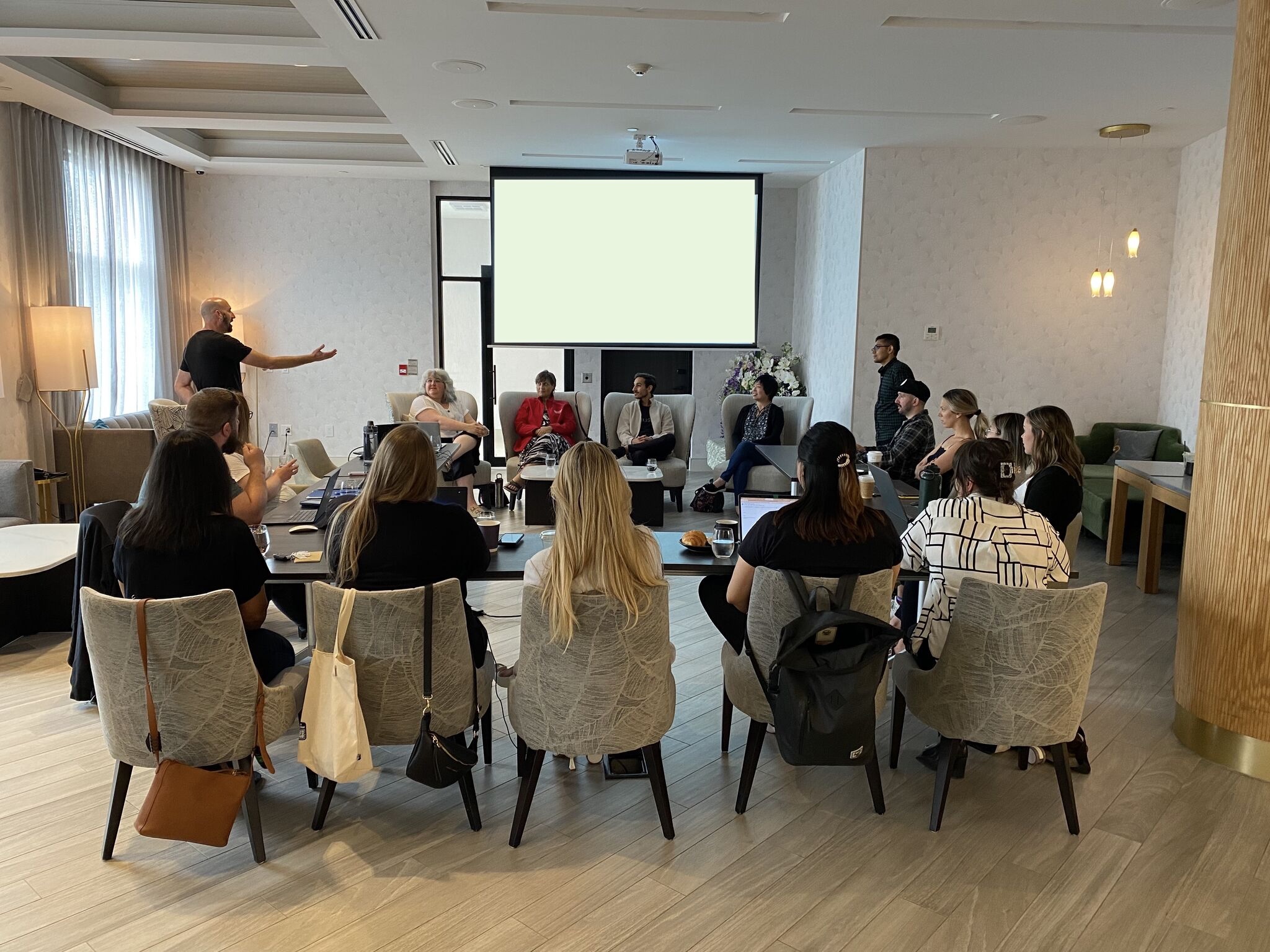
The most bounded thing I sell, and the fastest way for a team to find out whether a longer engagement is worth anyone’s money. Three tracks, each run against your own work rather than someone else’s case study.
Track one
Strategic problem-solving
A process-driven approach for small teams
Plenty of teams say they are strategic. Fewer are. The usual failure is jumping straight to execution before the underlying problem has been defined, and moving quickly in the wrong direction, or leaning too hard on AI to do the thinking, produces work that is busy and unaligned.
Being strategic is not a mindset. It is a purposeful process. This session teaches a team to put a deliberate pause between noticing an issue and acting on it, and to name what they are actually trying to solve before choosing tools or tactics.
Track two
Product marketing as a practice
The function most companies underrate
Product marketing is routinely overlooked, especially in startups and small businesses that do not know what they do not know. Done properly it is the hub connecting product and engineering, sales, customer support and marketing, with spokes running to each.
Individuals or teams learn how that connective work should actually run, how to build real customer empathy, and how to develop positioning strong enough to sell more of what you already have.
Track three
Lifecycle marketing and deliverability success
Customisable in scope
From a single email through complex cross-channel communication, lifecycle marketing is a term thrown around far more often than it is understood. The ability to push information out to customers and prospects is not replicated by any other marketing tactic.
Scope is set with you. It can run from lifecycle planning and execution through conversion rate optimization, proper segmentation, and email deliverability.
What arrives afterwards is a written summary of what the team decided and what it committed to, not a copy of the slides.
How an engagement starts
Four steps, and you can stop at any of them.
Inquiry
The form comes straight to me rather than into a queue.
Reply in a business day
Scoping call
Thirty minutes on whether this is something I can genuinely help with.
Honest read on fit
Written scope
What is included, what is not, and what it costs before anything starts.
Fixed fee or retainer
The work
Done by me. Nothing gets handed to someone junior after the call.
Written deliverable
Conference and podcast appearances are a different thing entirely, and there is a route for those on the form.
Tell me roughly what is going on through the contact form and I will give you an honest read on whether I can help. More on the background behind all of this is on the about page.